

The Great Reallocation: Flat Budgets, Rising Expectations
According to Bain’s latest research, overall IT budgets are expected to remain largely flat through 2026. At first glance, this suggests stagnation, but the reality is far more dynamic.
Organizations are reallocating spend toward technology services, particularly in areas like AI, cybersecurity, and cloud. This reflects a structural shift:
- Technology services are no longer discretionary
- They are becoming foundational to productivity, resilience, and growth
- Enterprises expect measurable outcomes—not just delivery
This change is being driven by a clear mandate: do more with the same budget but deliver significantly higher impact.
Interestingly, industries like consumer-packaged goods, B2B manufacturing, and property & casualty insurance are showing slower movement. However, most sectors are accelerating toward service-led transformation, relying on partners who can scale capabilities quickly and deliver integrated solutions.
AI Moves from Experimentation to Accountability
The era of AI experimentation is over. Enterprises are now scaling AI/ML investments—but with a critical shift: they expect tangible, measurable returns.
This aligns closely with findings from Microsoft’s Global AI Diffusion Report:
- Global AI usage rose from 16.3% to 17.8% of the working-age population in Q1 2026
- 26 economies now have over 30% AI adoption
- The UAE leads globally at 70.1%, signalling aggressive national-level AI strategies
- A widening gap is emerging between the Global North (27.5%) and South (15.4%)
What’s driving this surge?
- Improved multilingual AI capabilities (especially across Asia)
- Increased accessibility of generative AI tools
- Stronger integration into everyday workflows
But with adoption comes pressure. Enterprises are no longer satisfied with AI pilots—they want productivity gains, operational efficiency, and new revenue streams.
This is forcing tech service providers to rethink their approach. Success now depends on combining:
- AI + Data
- Cloud + Security
- Talent + Scalable commercial models
The winners will be those who can deliver end-to-end transformation—not isolated AI solutions.
Cybersecurity’s Turning Point: From Signals to Intelligence
While AI dominates boardroom discussions, cybersecurity is undergoing an equally profound transformation.
Insights aligned with Gartner’s latest evaluations highlight a critical gap in the market: many vendors still lack true Digital Risk Protection Services (DRPS) capabilities. In fact, stringent qualification criteria filtered hundreds of vendors down to a select few—underscoring how high the bar has become.
The core issue? Traditional cybersecurity approaches are no longer sufficient.
The industry is rapidly moving from fragmented tools to AI-native intelligence platforms that unify:
- Dark web intelligence
- Social media monitoring
- Open-source intelligence (OSINT)
- External attack surface management
- Infrastructure and cloud visibility
- Brand and digital risk monitoring
- AI-driven risk quantification
This marks a fundamental shift:
Cybersecurity is no longer about alerts—it’s about context, correlation, and actionable intelligence.
Compliance checklists alone no longer differentiate vendors. What matters now is:
- Depth of intelligence
- Ability to execute at scale
- Real-time risk visibility
- Measurable business impact
The Convergence Era: Where AI, Security, and Services Meet
What ties these trends together is convergence.
Technology services firms are no longer competing on individual capabilities—they are competing on integration.
To stay relevant, providers must:
- Deliver AI-powered insights embedded within business processes
- Integrate cybersecurity as a continuous intelligence layer
- Enable cloud-driven scalability
- Build flexible commercial models aligned with outcomes
This convergence is redefining the role of technology partners. Enterprises are no longer looking for vendors—they want strategic enablers of transformation.
The Bottom Line
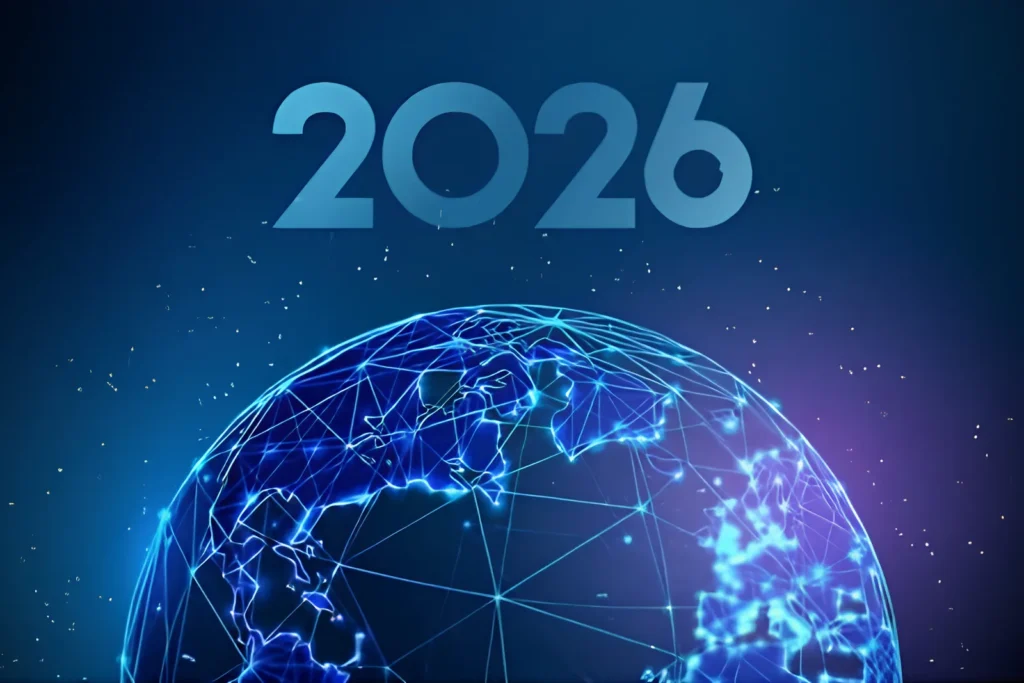
The global tech narrative in 2026 is not about bigger budgets, it’s about smarter ecosystems.
- IT spending may be flat, but expectations are soaring
- AI is scaling, but accountability is intensifying
- Cybersecurity is evolving, but only intelligence-led platforms will lead
Technology services are no longer optional—they are mission-critical.
All Content Rights Reserved by Catalyst.