

But the next chapter of AI is expected to be far more transformative.
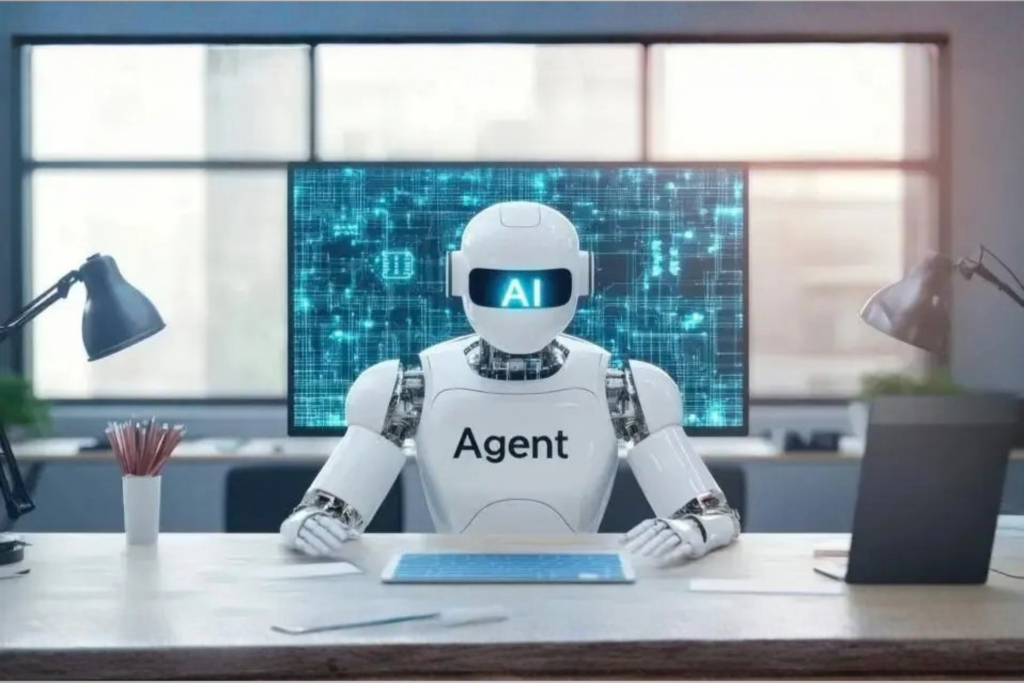
Enter AI agents.
Unlike traditional AI assistants that wait for a user to provide instructions, AI agents are designed to take a more active role. They can analyse data, interact with different applications, execute workflows and complete multi-step tasks with limited human intervention.
This shift is gradually moving AI from being a productivity tool to becoming something closer to a digital workforce.
AI Is No Longer Just Answering Questions
Imagine an AI system that does more than identify an IT issue.
It could investigate the problem, review previous incidents, analyse system data and initiate a response. Similarly, a finance-focused AI agent could collect information from multiple platforms, identify unusual transactions and prepare reports automatically.
The difference is significant.
Traditional generative AI primarily responds to prompts. AI agents are being developed to pursue objectives and take a series of actions to achieve them.
For enterprises, this could unlock new levels of automation across departments such as IT, cybersecurity, finance, customer service and supply chain management.
However, greater autonomy also brings greater responsibility.
Managing Machines That Can Make Decisions
As businesses begin deploying more AI agents, technology leaders are facing a new challenge: managing systems that can independently interact with enterprise data and applications.
Every AI agent may require a clearly defined identity and a specific set of permissions.
What data can it access?
Which systems can it interact with?
What decisions can it make independently?
And when should human approval be required?
These questions are becoming increasingly important because an AI agent is not simply another software application. Depending on its role, it could potentially access multiple systems and perform actions at machine speed.
That makes governance essential.
A poorly configured AI agent could access sensitive information, trigger an incorrect workflow or make decisions based on incomplete or manipulated data. And unlike a human employee, an AI system can perform thousands of actions in a very short period.
The potential benefits are enormous, but so is the need for control.
When AI Becomes a Security Risk
For years, enterprises have focused on managing employees, devices, applications and cloud infrastructure.
AI agents could soon become another critical category that organizations need to manage.
This will require businesses to develop stronger frameworks around AI identity, access, security and accountability. Organizations will need visibility into what their AI agents are doing, what resources they can access and whether their actions align with company policies.
Cybersecurity teams, in particular, will have to adapt.
An AI agent with legitimate access to enterprise systems could become an attractive target for attackers. Instead of directly compromising a database or application, attackers may increasingly attempt to manipulate the AI systems that already have permission to interact with them.
This could create an entirely new attack surface.
The Future of Human-AI Collaboration
The future workplace is unlikely to be one where AI completely replaces human employees.
Instead, it may become a hybrid environment where humans and AI agents work alongside each other.
Employees could focus more on strategy, creativity and decision-making, while AI agents handle repetitive processes, data-heavy tasks and routine workflows.
But success will depend on how effectively organizations manage this new relationship.
The companies that benefit most from AI agents may not be the ones that deploy the largest number of them. Instead, the winners could be those that find the right balance between automation and human oversight.
As AI continues to evolve, the conversation is shifting from “What can AI generate?” to a far more important question:
“What should AI be allowed to do?”
That question could define the next era of enterprise technology.
AI agents are no longer just an interesting experiment. They are gradually becoming part of the modern enterprise infrastructure, and potentially, the workforce itself.
The future of work may not simply involve people using AI.
It may involve people managing it.