

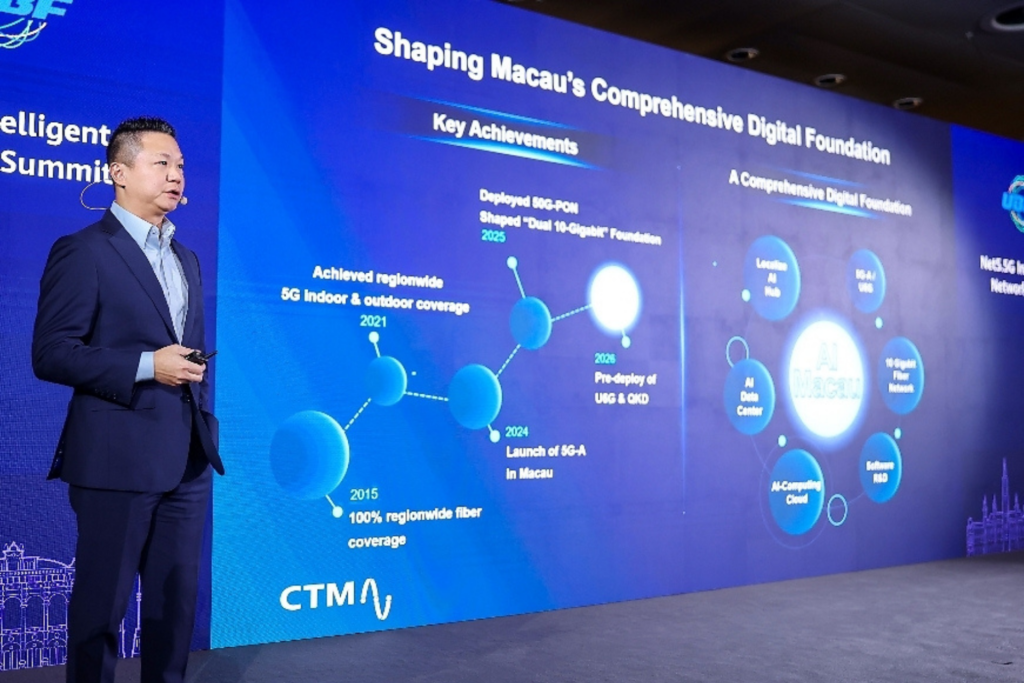
Driven by AI’s stringent high-reliability, low-latency requirements, CTM has envisioned an “intelligent, deterministic, and secure” network infrastructure. By incorporating AI-based AGW and BNG (Broadband Network Gateway) capabilities, CTM equips the network with an intelligent capacity for service recognition and dynamic planning; This allows traffic to be intelligently routed to the optimal routes, thus improving the user experience and reducing international bandwidth costs.
With the evolution to AGW 2.0, CTM will integrate telemetry with AI-based analytics, which will be a quantum leap: moving from manual optimization to AI-powered self-optimization. This will deliver a deterministic and differentiated experience for high-value scenarios, driving revenue growth in the government and business sectors.
CTM argues that planning for future network security must go beyond simply installing a firewall at the network perimeter; Rather, security must be an intrinsic capability of the network itself. Under this vision, the sector can explore network modernization in three key areas:
- Security built into the device. By leveraging built-in security capabilities and AI-based behavioral analytics, devices can identify anomalous behavior in real-time. This enables a transition from traditional defense—based on signatures and rules—to intelligent, behavior-based detection.
- Security-as-a-Service capabilities. By bundling security capabilities such as DDoS defense, IPS, and anti-phishing solutions, operators can provision network security services in a matter of days. This eliminates the need for manual on-site deployments and allows government and enterprise customers to subscribe to on-demand security services, facilitating rapid monetization of network security capabilities.
- Preparing for the Quantum Computing Era. To address the emerging security risks that quantum computing poses to traditional cryptographic frameworks, CTM and Huawei have led a joint innovation initiative aimed at developing an IP architecture that integrates communication using quantum key distribution (QKD). This allows operators to proactively advance in validating quantum-safe technologies and planning their networks. This provides next-generation security capabilities for data transmission in critical sectors, while an innovative integrated QKD solution significantly reduces operation and maintenance (O&M) costs.
Beyond charting the course to boost Macau’s grid competitiveness, these technology evolution roadmaps offer global operators a new model for the transition to smart and secure grids in the age of AI.