

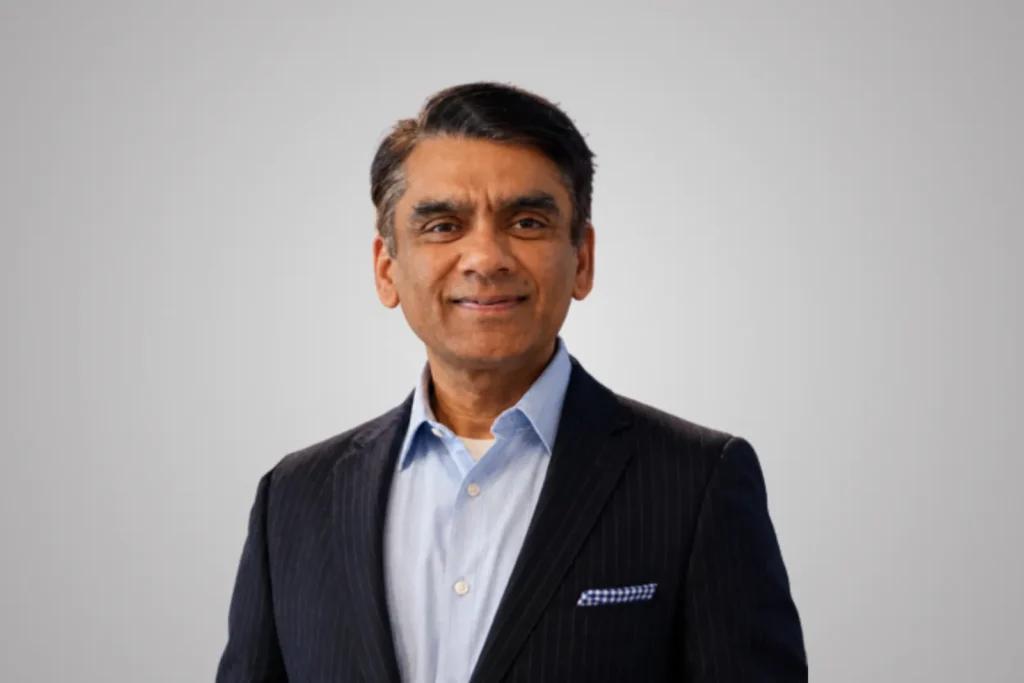
In this exclusive media interaction, we engage with a dynamic founder and transformation leader. He has led complex, high-impact change programs across industries while building AI-driven enterprises from the ground up. Adi Agrawal, CEO, CLR80 Inc, combines boardroom experience with an entrepreneurial mindset to provide insight into what drives-or derails-enterprise transformation today. The interaction offers a forward-looking perspective on disruption from the evolving role of artificial intelligence in redefining business models to the nuanced challenges within regulated financial markets.
You have handled high-stakes transformations across industries. What is the most common reason transformations fail despite strong intent?
The most common reason is also the simplest – leaders want results – Change – without the cost. By definition – Transformations are big, ambitious, material, meaningful, visible. And the cost is noise, attrition, capital, time, and the kind of attention that does not delegate well.
A chairman I worked for once told me he wanted transformation done quietly, because his Board was very sensitive. I told him that transformation is a contact sport. We can execute it with care, empathy, and discipline. But the people living through for months and years must know what they are walking into, and the ones who lead them – all the way to the top – need the stamina to stay with the mission when things get uncomfortable.
So, the pattern repeats. The senior team delegates. Transparency gets traded for comfort. Timelines get compressed to match a Board cycle that has no relationship to how organizations metabolize change. Strong intent without the discipline to absorb the noise is just waste of time and treasure.
As a founder of AI-enabled companies, how do you see AI reshaping enterprise transformation over the next 3–5 years?
What I am watching is the slow rebuild of decision quality inside the enterprise. Most companies, even the ones with the right tools and clean high-quality data, make material decisions on conjecture dressed up as fact.
Over the next three to five years, I expect agents to become the layer where leadership teams finally close that gap between what they know to be true, what they think is true, the uncertainties they understand and what they decide. Generative content and chatbots are just the surface. The real interesting work is underneath.
The Boards and CEOs I talk to are mostly still framing AI as a technology adoption question. Pick the platform, fund the program, name the executive sponsor. That maybe a place to start, but that is the wrong mission.
The real mission is to understand whether the company has the institutional patience to rebuild the inputs to its decisions – customer signal, operational truth, regulatory posture, talent depth. AI does not replace any of that. It exposes where the company has been operating on conjecture, misinformation and poor-quality data for years.
The companies that get this right will not look more “AI-enabled” from the outside. They will become empowered from the inside. Better forecasts. Fewer surprise quarters. Customer experiences that reflect what the company knows about its customer, instead of what the brand team wishes were true. These companies will have internal swagger, market status and customer success.
Having deep expertise in regulated capital markets and fintech platforms, what are the biggest transformation challenges facing financial institutions today?
The honest answer is that most large financial institutions are running on three legacy stacks at once. The technology stack, the regulatory stack, and the leadership stack. Each was built for a different decade, and the joints between them are where the transformation work is.
Technology is the easiest to name and the hardest to fix without breaking things that are running. Cores that were never designed for real-time, data architectures stitched together through twenty years of M&A, and risk and finance reporting that still depends on someone in a back office reconciling an Excel file and pushing it to another Excel file.
Regulation is mostly well-meaning, occasionally not, and frequently misunderstood inside every institution that must live by it. People get confused between the rules and the spirit of the rules, or worse, confuse compliance with control. Companies create this maze of “no you cannot do this” policies over a decade or more and then wonder why they are losing to new ideas and offers in the market
And then there is the leadership stack. Boards that do not yet know what they do not know about AI, Cyber, or Systemic risks. Management teams who have learned to manage the Board’s anxiety more carefully than they manage the business.
None of these can be transformed in isolation. You cannot modernize the core without bringing the regulator along. You cannot bring the regulator along without a Board that understands what is being asked. And you cannot get the Board there without management willing to be transparent about what is broken. That is the work – slower, more expensive, and less glamorous than what the press releases promise.
As a founder yourself, how does your entrepreneurial experience shape your advisory approach to boards and enterprises?
When I sit with a Board or a CEO, I am usually thinking about three things, in this order.
What does the customer pay for, and how does this decision affect that? What does this team know, and what are they assuming? And if I were in this seat, where I have been, what would I want from the outside voice that I never seemed to get?
The third question is the founder lens. Founders know how lonely material decisions get. They also know how easy it is for an advisor to be intelligent and useless at the same time – to bring frameworks, to bring benchmarks, to leave without having moved anything. I have been on both sides of that. I have hired a lot of advisors over twenty years and written checks somewhere north of four hundred million dollars to consulting firms and partners. The success rate was about half. That experience is more useful to me now than anything I learned on the other side of the table.
So, I try to be useful in a specific way. I work with management, not around them. I prefer to be the partner the CEO will call weeks before the Board meeting, not after. And I try very hard not to be the advisor who is busy protecting his own brand.
For me the client and their mission is the hero – always. The customer is the hero behind the client. My job is to make that connection and path clear – again.
What advice would you give to startups struggling to gain traction or facing stagnation?
Go back to the customer. Not the persona, not the segment, not the strategy deck. The actual person paying you, or the person who almost did and walked away. Sit with them. Listen. Find out what they hired your product to do, and what you keep insisting your product is for. The gap between those two answers is usually where real actionable traction lives.
The second move is to retire work. Most stagnating teams I have seen are not under-resourced. They are over-committed to things that no longer matter. I once walked into a product organization with more than five thousand open requests in the backlog. We asked patiently which ones were material to the customer, and which were duplicates, stale, or somebody’s pet project from two regimes ago. About three and a half thousand came off the board within a couple of months. Around thirty to forty truly mattered. We shipped those in ten weeks.
Stagnation is rarely a creativity problem. It is usually a clarity problem, dressed up as a resource problem. Get honest about what the customer pays you for, retire what does not serve that, and then keep moving with pace and focus.
All of this needs stamina and a mindset of discipline and discernment. Unfortunately – this needs daily practice – it’s not a process you can design and forget.
If you had to give one piece of advice to today’s CEOs navigating disruption, what would it be?
Be the voice that is in the customer’s head inside your own building. Imagine what you can do with that and beyond to keep delighting your customer.
Most CEOs I know are very busy being the Board’s representative to the company, the market’s representative to the team, or the company’s representative to the press. That is the job description on paper. These are also the jobs that any competent executive can be assigned to do.
The harder job is the one that does not delegate. To be the person inside the company who refuses to let the customer get abstracted away. To know, in specific detail, what the customer paid you for last quarter and what they are almost left over. To forecast what the customer will feel when they get the next release. To hold the team to that standard when the strategy deck wants to abstract and measure internal performance.
Most disruption stories, when you read them carefully, are stories about a competitor who decided to care about the customer you stopped paying attention to.
Everything else is real, and everything else matters. AI, geopolitics, capital cycles, talent. But they shape the conditions of the work. They do not replace the work. The work is the customer.
The conversation provides candid, practical advice for startups facing stagnation and CEOs navigating uncertainty in a rapidly changing business environment. This advice is based on founder-led thinking. According to the veteran, companies must become empowered with AI in a variety of ways. It is imperative that companies invest in understanding their customers and what they are experiencing with technology and artificial intelligence. In essence, his message is clear: organizations that combine AI adoption with a deep, continuous understanding of customer experience will be best positioned to stay relevant and lead in an increasingly dynamic business landscape.
About the Contributor
Adi Agrawal is a transformation expert, board advisor, and former Chief Transformation Officer with 25+ years across strategy, technology, and risk. He has steered $100M–$480M operating budgets, 150–4,500-person global teams, $11B+ in M&A integrations, and $2B+ in transformation programs and value delivered. Today he helps Boards, CEOs, and leadership teams turn AI and Technology from hype into durable advantage — sharpening the human judgment, discernment, and decision quality that separate market leaders from the merely busy. Known for his “Plain Professional English” style, Adi makes leaders think harder and teams deliver. He also writes a publication bridge; you can read it at bridge.adiagrawal.com
All Content Rights Reserved by Catalyst.