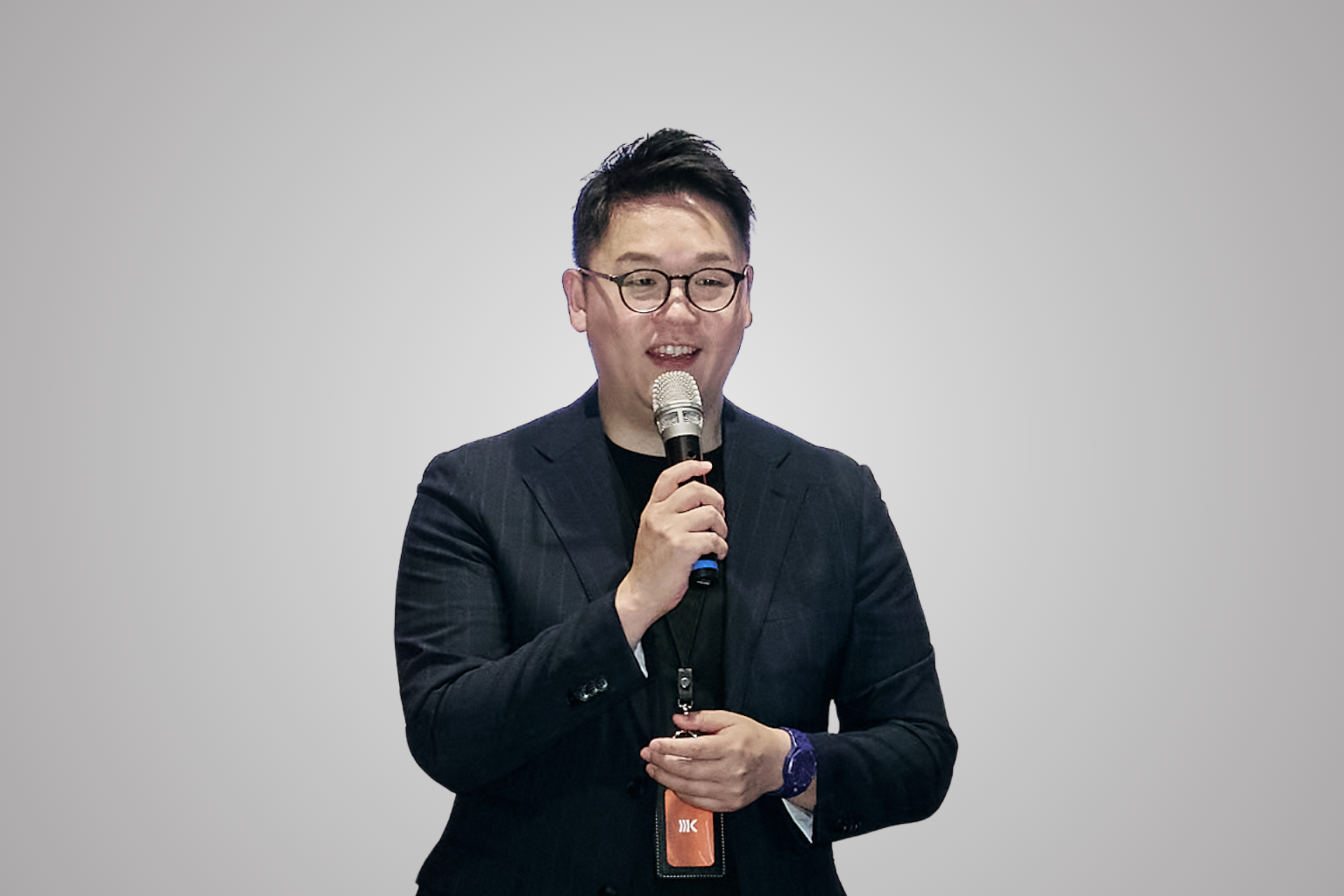




With reference to this notion of purpose-driven Generative AI adoption, Vladimir Razuvaev, Chief Executive, Yango Tech, said: The UAE’s push towards generative AI applications reflects a broader shift from experimenting with AI tools to embedding AI into the core of how organisations operate, scale, and deliver services. With the UAE’s AI economy projected to reach AED170 billion by 2030, organisations are increasingly prioritising practical AI deployment tied to operational performance, governance, and long-term competitiveness.
As generative AI adoption accelerates across sectors, there is growing demand for clearer frameworks that help organisations identify high-impact use cases, implement AI responsibly, and scale deployment effectively. The guide supports this transition by helping businesses move beyond isolated experimentation towards more structured and outcome-driven AI integration across operations, customer engagement, and decision-making processes.
For the UAE, the opportunity extends beyond productivity gains to building stronger digital operating models across government and enterprise sectors, with governance, scalability, and service quality embedded from the start.’’
19 Use Cases, Endless Possibilities
At its core, the guide identifies 19 key use cases that reflect how generative AI is already reshaping real-world workflows. These span across high-impact domains such as text generation, image and video synthesis, language translation, and even music composition. By breaking down these applications into actionable insights, the guide moves beyond theory and offers a hands-on framework for integrating AI into everyday operations.

“The UAE’s ‘Leading Generative AI Applications’ guide is an important step in moving AI adoption from experimentation to structured implementation. What makes this initiative significant is not only the cataloguing of tools and use cases, but the signal it sends that AI is becoming core infrastructure for governments, enterprises, and the wider talent ecosystem.
We are entering a new phase where value creation will depend less on access to AI models and more on how organisations operationalise them responsibly, securely, and at scale. The next frontier is not simply using generative AI applications, but building governed, measurable Autonomous AI Teams that can execute real business functions across operations, customer service, HR, and knowledge work.
The UAE continues to demonstrate leadership by creating practical frameworks that accelerate adoption while reinforcing responsible use. This is how nations build competitive advantage in the AI economy.” said Alfred Manasseh, COO & Co-Founder of Shaffra.
A standout feature of the guide is its emphasis on selection methodology. Rather than overwhelming users with countless tools, it provides a structured approach to identifying the right AI solutions based on specific needs—whether for content creation, operational efficiency, or customer engagement. This is particularly valuable for organizations navigating the crowded and rapidly evolving AI landscape.
From AI Pilots to Enterprise

Addressing how organizations can move beyond isolated experimentation and successfully integrate generative AI into core business workflows, Levent Ergin, Chief Strategist for Agentic AI, Regulatory Compliance & Sustainability, Informatica from Salesforce, commented, “Organizations need to stop treating generative AI as a novelty and start aligning it to measurable operational outcomes. The most effective approach is to identify workflows that are low risk, high in volume, low in value to the human operator performing the task, and capable of delivering a strong return on investment once automated.
A practical starting point is employee-facing use cases, where organizations can safely test and operationalize AI capabilities without creating unnecessary customer or reputational risk. This allows businesses to build confidence, governance maturity, and internal trust before scaling into more sensitive processes.
The organizations succeeding with AI today are not necessarily those deploying the most advanced models, but those embedding AI into repeatable workflows with the right process orchestration, trusted data foundations, and human oversight. That is ultimately what turns experimentation into enterprise-scale transformation.’’

Antonio Rizzi, Vice President, Solution Consulting – EMEA South, ServiceNow highlighted that “generative AI is evolving from a test-phase technology to a core business enabler. He said “Organizations should move from isolated pilots to workflow redesign. The UAE guide positions generative AI as a practical tool to enrich work, education, innovation, and decision making, while keeping humans at the center. The shift requires moving from generation to orchestration: Generation is accessible to everyone. Orchestration requires architectural competence. In practice, this means selecting high-value workflows, connecting AI to trusted enterprise data, and embedding it into repeatable processes with clear owners, roles, approvals, and metrics. AI should not sit on top of fragmented systems; it should operate through unified data, integrated workflows, and governed action. In essence: AI reasons. Workflow acts.’’
From AI Ambition to Responsible Execution
Another noticeable and important fact is the guide’s focus on data privacy and ethical usage. It advocates the need for transparency in AI-generated outputs and highlights best practices for safeguarding sensitive information. As generative AI becomes more deeply embedded in decision-making processes, this responsible approach ensures that innovation does not come at the cost of trust or security.

With reference to businesses strike the right balance between rapid AI adoption and governance, especially in sensitive sectors, Guru Sethupathy, General Manager – AI Governance at Optro, said: “We have recently done research around AI adoption and what we found is that over half of enterprises already have AI quietly running inside their vendor platforms, often without even realizing it. The challenge is, they’re not managing it, and that introduces real risk. For example, only a third maintain an actual AI inventory.
So, my advice would be to stop thinking about AI adoption and start thinking about AI operations. Build the governance infrastructure now. Incident response protocols, clear ownership models, and continuous monitoring need to be foundational. And make it operational, not just policy. That’s how you move from “we’re experimenting with AI” to “AI is how we work.”
This is the question keeping every CISO up at night. The truth is that you don’t have to choose between speed and safety. That’s a false binary. The real issue is that traditional governance frameworks are built for static systems, and AI is anything but static. In sensitive sectors, the risk isn’t some catastrophic model failure. Often it’s employees unknowingly feeding proprietary data into AI systems or falling victim to AI-powered social engineering attacks. And this is why our research found that a third of security leaders are genuinely worried about this.
The smart move would therefore be to deploy intelligent, continuous monitoring that keeps pace with actual behaviour, not just policies that sit in a document. Use AI-powered tools to automate oversight so you’re essentially leveraging the same technology to manage the risks it creates. That way, you get the speed your business needs without gambling with your risk posture.’’
Inclusive AI Starts with Accessible Knowledge
Accessibility is another key pillar. The guide is not limited to technical experts; it is intentionally designed for a broader audience, including students, entrepreneurs, and job seekers. By democratizing knowledge around generative AI, the UAE is enabling a wider segment of society to participate in and benefit from the digital economy.
This initiative aligns closely with the UAE’s long-term vision under the UAE National AI Strategy 2031, which seeks to position the country as a global leader in artificial intelligence. The nation’s AI ecosystem is already gaining global recognition, supported by advancements such as its homegrown large language model, Falcon LLM, known for its performance and open-source accessibility.

“To complement the UAE’s visionary initiative to train 80,000 employees, JetBrains is deeply committed to regional upskilling through tailored educational programs, interactive professional services workshops, and creator enablement initiatives. These programs are designed to help organizations build the practical skills required to manage, audit, and collaborate effectively with autonomous AI technologies.’’ said Nadia Rinsky, Head of GTM, MENA at JetBrains.
Massive Infrastructure
On the infrastructure front, ambitious projects like Stargate AI Data Center—a $30 billion, 19.2 square kilometer data hub—are set to power the next generation of high-performance computing and AI innovation. These developments are complemented by strong adoption rates, with over 70% of the UAE’s working-age population already using generative AI tools in their daily routines.
Together, the guide and the broader ecosystem signal a clear intent: to not only adopt AI, but to lead its responsible and impactful integration on a global scale.
All Content Rights Reserved by Catalyst.