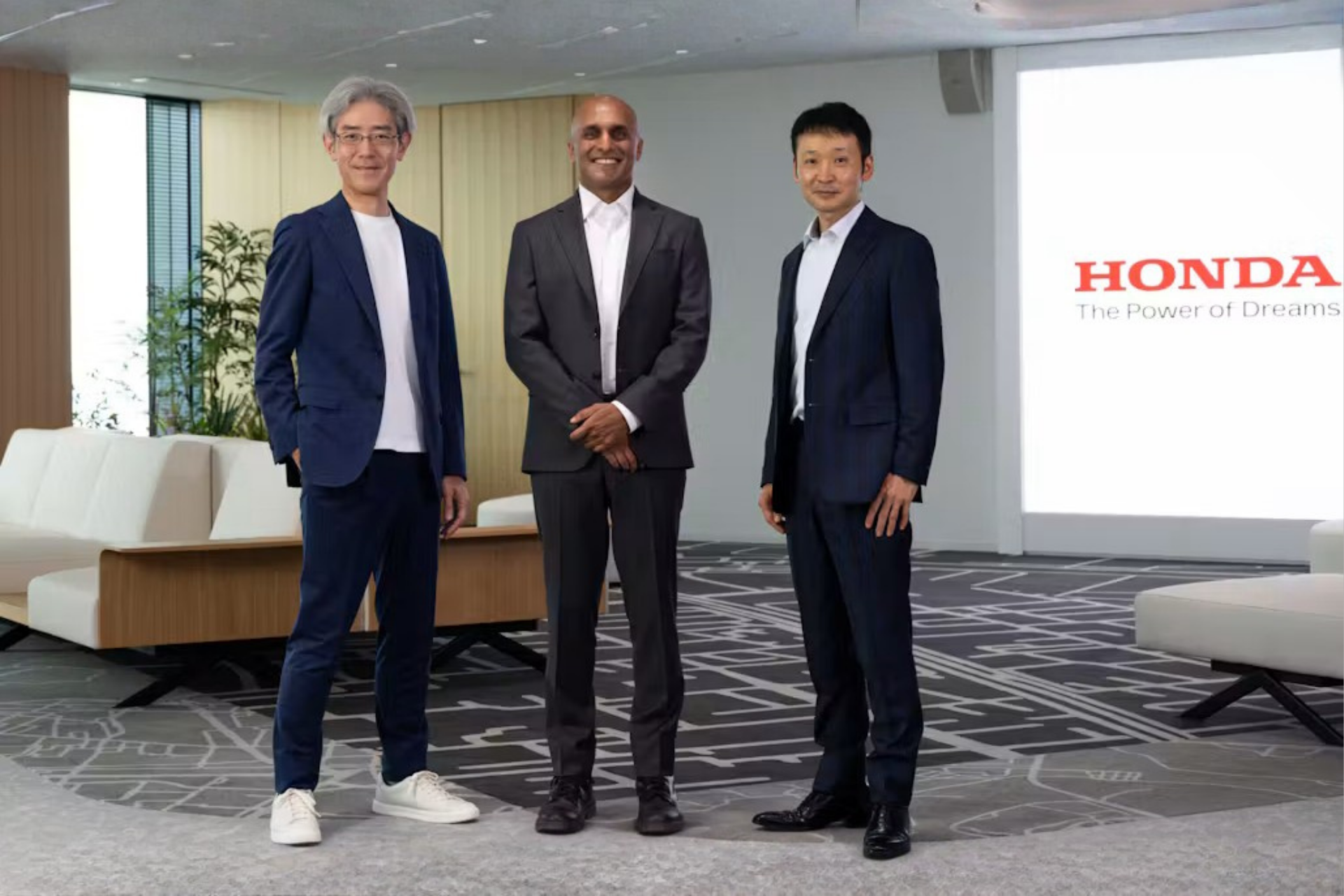



With over two decades of global experience across Asia, Europe, and North America, Ashima Raheja, Executive Managing Director at Accenture, brings a unique perspective shaped by cultural adaptability, people-centric leadership, and a deep focus on driving transformation. In this exclusive interaction with The Catalyst, she shares insights on the evolution of her leadership journey, the opportunities and challenges of AI-enabled enterprise systems, and the intelligent experiences that will define the next wave of digital transformation.
With over two decades of industry experience across multiple countries and roles, how has your leadership style evolved to drive business transformation in diverse environments?
There has been an immense learning for me through this journey. The most tangible of that is the culture aspect of that learning, as I moved across countries. Technology changes its perspective in its vision, design and adoption, across continents. The Tech-hungry and diverse population in Asia, led to highly creative talents in workforce that led to high-paced technology evolution and massive adoption. I, as a leader, had to be equally high-paced and creative. My hierarchical leadership reigned in Asia, amidst a culture where people prefer to look up to and get inspired by their strong leader.
However, as I moved to the West (Canada and Europe), the culture of technology adoption was at a different scale in these developed countries. Planning took longer than execution here; newer technology adoption was analysed across multiple dimensions before considering it for adoption. Here, leaders were expected to work in tandem with workforce, which is a different perspective. My leadership style became adaptive with time and experience. Couple of leadership aspects that stayed common and grew in strength for me though were: Visionary, Clear Communication, Keep a Plan B for every situation and People at Heart of everything. Tech can be learnt. It is the attitude of the people that transforms the world.
Today, I mentor 5 talented individuals from different backgrounds and genders and I adopt different approaches for each of them.
With extensive experience spanning cloud portfolio design, GTM strategies, and AI adoption, what trends in digital innovation excite you the most today?
Everything about AI reminds me of the Internet boom decades ago. The way, it turned a corner for humanity back then, the same is the potential that AI carries for this generation and excites me the most. AI would alter everything we do in technology from design, code, sell and deliver. And when all these elements would work in tandem via AI, the future of business would completely transform, while humans would bring the much needed human-intellect.
However, I also believe that a responsible and reliable attitude and framework is a MUST for AI development or else it carries a major risk of derailing the potential.
How do you align business strategy with rapid shifts in digital technology adoption?
First of all, staying in the know is key for everyone in Tech business. Being aware of trends is imperative for any leader. Then, it is important to do research and analysis on viability and real value that new trends bring in. Digital technologies are already proving valuable in reduced costs and higher profits. I apply 3 principles here:
- Experimenting with new tech and take early adopter risks. Doing this in small steps, where the risk is low, is key. The biggest advantage that I experienced with this approach is that you learn and grow with the technology.
- Change Mgmt. It is critical in adopting any new technology.
- Focus on People. Involve people in the change and engage them in the journery.
What are the biggest opportunities and challenges in integrating enterprise systems with AI and hyperscale platforms for businesses today?
Opportunities:
- Scalable AI at the core of Business operations – Hyperscalers already provide advanced compute and AI services e.g. LLMs. Embedding these into the Enterprise systems unlocks predictive forecasting, smart pricing, personalized customer-engagement.
- Data unification and intelligence – Prebuilt AI models and APIs by hyperscalers reduce development times. This helps Enterprises to experiment faster and scale pilots into production.
- Cost optimization and Operational Efficiency – Dynamic scaling of infrastructure avoids over-provisioning, reduced TCO.
Challenges:
- Integration Complexity – Legacy enterprise systems are not native AI ready. Their data formats, APIs, RTP requirements are challenging for seamless integration.
- Data Governance and Compliance – Enterprises operate in regulated environments. Moving sensitive data into hyperscaler AI services raises concerns about privacy and security.
- Change Mgmt. and skill gap
- Reliable, Relatable and Responsible AI – AI decisions in critical industries of Finance, HR and supply-chain can impact people”s lives directly. Enterprises must do due diligence and pre-planned mitigation before this integration.
In the era of AI-driven ERP and cloud ecosystems, what intelligent experiences do you believe will define the next wave of enterprise transformation?
We are entering a phase where enterprise systems would be more than just being System of records. This will lead to almost a Digital twin of Enterprise where leaders would be able to simulate new business strategies and watch impacts across finance, HR and operations. There shall be more outcomes like:
- Anthonomus enterprise workflows
- Conversational and natural interfaces
- Predictive decision-making
- Highly-Personalized customer and employee journeys
- Connected Ecosystem
- Most importantly, a Hybrid Intelligence model with Human and Artificial Intelligence.
Having managed both strategy and execution, how do you ensure that technology adoption translates into meaningful experiences rather than just efficiency gains?
100% in concurrence with that. Technology directly connects to experiences. In one of my projects, I had to create a Digital Shared Services Model for Midmarket customers going on cloud transformation journey. I strategized completely differently from the traditional models, interns of front-end customer engagement, back-end tools and processes. Ofcourse it resulted in 52% higher efficiencies than traditional models. However, it led to the emerge of higher customer experiences. Our Customer Satisfaction Survey results were 25% higher than from the traditional models.
Newer and smarter technologies impact experiences across all dimensions. Besides better experience for the Customers, it also makes it simpler and smarter for people delivering towards customers. Managing tools becomes easier and avoids litany of manual processes. When development and support is managed by automation and AI, the people enjoy the outcomes of it.
As enterprises accelerate their digital transformation journeys, the convergence of AI, cloud, and hyperscale technologies is reshaping the very fabric of business operations. The path forward lies not just in adopting advanced tools but in fostering adaptive leadership, responsible innovation, and a people-centric approach that turns efficiency into meaningful experiences. By embracing cultural diversity, experimentation, and hybrid intelligence, organizations can unlock new possibilities, reimagine enterprise systems, and create a future where technology and human ingenuity drive impact together.
All Content Rights Reserved by The Catalyst.