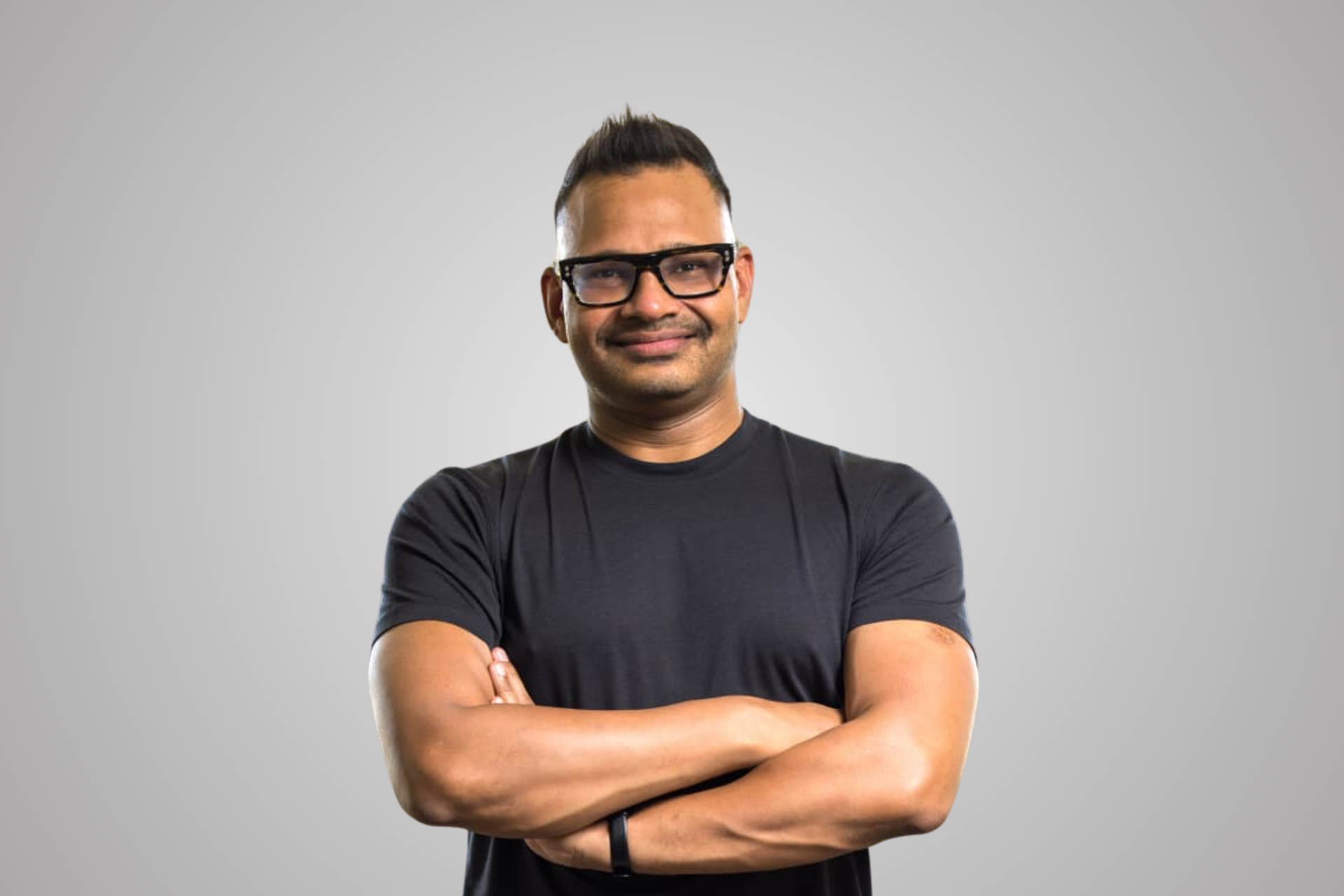


In this exclusive interaction, Dr. Balamurugan Balusamy, Dean and Professor at the School of Engineering & IT at Manipal Academy of Higher Education Dubai, shares insights on academia evolving into innovation hubs and how the role of universities is shifting from being knowledge providers to becoming innovation orchestrators and learning enablers. In this interaction, he also highlights the rapid pace of technological transformation and shares insights into the vision, infrastructure, and innovation ecosystem behind NEXORA for the future.
How is academia evolving from being purely a knowledge institution to becoming a full-fledged innovation and incubation hub?
Universities today are no longer evolving as spaces that simply transfer knowledge from faculty to students. They are becoming innovation ecosystems where ideas are explored, technologies are built, startups are nurtured, and interdisciplinary collaboration drives real-world impact.
This shift is being driven largely by changing student expectations. Information is now available everywhere through AI systems, digital platforms, and open-source learning communities. Students no longer come to universities only for access to information, they seek mentorship, hands-on learning, research exposure, entrepreneurship support, and future-ready skills.
As a result, academia is moving beyond traditional classroom teaching toward experiential, innovation-driven learning. Universities are increasingly expected to create environments where students can experiment, prototype, collaborate with industry, and solve real-world challenges.
This vision inspired us to establish NEXORA at MAHE Dubai — not merely as an AI lab, but as a multidisciplinary innovation ecosystem focused on applied research, intelligent systems, and entrepreneurial thinking.
At MAHE Dubai, we believe universities of the future will not just produce graduates, they will help create innovators, entrepreneurs, researchers, and technology leaders capable of shaping the future.
How does NEXORA ensure alignment between academic innovation and enterprise technology environments?
One of the biggest challenges today is that academia and enterprise technology often evolve at very different speeds. While industries are rapidly advancing through AI, automation, and intelligent systems, educational environments sometimes struggle to keep pace with real-world technological transformation.
At NEXORA, our goal is to bridge that gap by creating an enterprise-grade innovation ecosystem within academia itself. The lab is equipped with advanced computational infrastructure, AI development environments, immersive technologies, edge AI systems, and industry-standard frameworks that allow students and faculty to work in environments that closely mirror modern enterprise settings.
More importantly, NEXORA emphasizes applied learning and industry collaboration. Through partnerships with AI companies, research institutions, and innovation ecosystems, students gain exposure to real-world problem-solving, experimentation, and emerging technology practices.
We also strongly believe that faculty enablement is critical. Educators must move beyond simply using AI tools to understand how intelligent systems are built, validated, and deployed. That directly influences how effectively students are prepared for the future workforce.
In essence, NEXORA is designed to ensure that academic innovation remains aligned with enterprise realities and prepare students not just to adapt to technological change, but to actively shape it.
How important is it to integrate AI learning across disciplines such as management, health sciences, and media?
The future of higher education lies not in siloed disciplines, but in interdisciplinary intelligence. AI is no longer confined to computer science; it has become a foundational capability influencing decision-making, creativity, automation, and innovation across industries.
In management, AI is transforming areas such as predictive analytics, financial modelling, customer intelligence, and strategic decision-making. In health sciences, AI is reshaping diagnostics, medical imaging, precision medicine, and preventive healthcare. In media and communication, AI is redefining content creation, audience engagement, immersive storytelling, and digital trust.
This means future professionals across every domain must understand not only how to use AI tools, but also how to work responsibly with intelligent systems.
At Manipal Academy of Higher Education Dubai, we strongly believe that AI should not be treated as an isolated specialization, but as an institutional capability embedded across academic ecosystems. Through NEXORA, students from business, health sciences, media, engineering, and technology collaborate on interdisciplinary projects that combine domain expertise with AI-driven innovation. This vision is also deeply aligned with the United Arab Emirates’s broader ambition to become a global leader in AI-driven innovation through the UAE National Strategy for Artificial Intelligence 2031.
Ultimately, the workforce of tomorrow will be defined by professionals who can combine subject expertise with AI capability. The future belongs to interdisciplinary thinkers who can navigate both technology and human-centered problem-solving.
What mechanisms are in place to support ideation, prototyping, and potential commercialization within the lab?
At the heart of any meaningful innovation ecosystem lies a simple but powerful principle: ideas must be given the right environment to evolve into impact. At MAHE Dubai, we view innovation as a structured journey from ideation and experimentation to prototyping and commercialization. This philosophy is deeply embedded within NEXORA.
The lab has been designed as a multidisciplinary innovation ecosystem equipped with with a carefully curated stack of software, hardware, computational infrastructure, and intelligent systems that allow students to build and test real-world solutions.
To support the innovation lifecycle, NEXORA includes dedicated experiential spaces such as the Experience Zone, Idea Zone, Learning Zone, and Experiment Zone. These spaces enable students to move from problem identification and brainstorming to skill development, prototype creation, and applied experimentation.
Importantly, students are supported through faculty mentorship, interdisciplinary collaboration, and structured academic guidance throughout the process.
Beyond prototyping, MAHE Dubai also emphasizes commercialization pathways. Through the university’s innovation and entrepreneurship ecosystem, students with promising solutions can receive support related to intellectual property awareness, startup incubation, technology transfer, and industry collaboration opportunities.
Our objective is to ensure that innovation within academia does not remain limited to classroom projects, but evolves into meaningful real-world impact.
How can university labs like NEXORA support 5and student innovators?
University innovation labs today must do far more than provide infrastructure. At MAHE Dubai, we believe entrepreneurship should become part of the student experience itself. Increasingly, students enter universities not only with career ambitions, but also with ideas they want to transform into products, solutions, or startups.
NEXORA has been designed as a high-impact innovation sandbox where students gain access to AI tools, intelligent computing infrastructure, cloud environments, experimentation platforms, and faculty mentorship that significantly lower the barriers to innovation. Equally important is the interdisciplinary nature of the ecosystem. Some of the most impactful innovations emerge when students from healthcare, business, media, engineering, and technology collaborate to solve shared challenges. NEXORA creates a common platform where this convergence naturally happens.
Beyond infrastructure, we also focus heavily on capability building through workshops, boot camps, industry-led sessions, and applied learning experiences that help students understand how to leverage AI and emerging technologies effectively.
Ultimately, our goal is simple: we do not want students to wait until graduation to begin innovating. We want them to start building while they are learning. When a student project demonstrates novelty, technical merit, or market potential, students are guided toward discussions on intellectual property protection, patent awareness, technology transfer, startup incubation, and commercialization pathways. This support enables ideas developed in an academic environment to potentially evolve into deployable solutions, entrepreneurial ventures, or industry collaborations.
How will the role of universities change in the next decade as AI and emerging technologies accelerate innovation cycles?
The role of universities is undergoing one of the most significant transformations in modern educational history. In the age of AI and emerging technologies, universities can no longer function only as centers of instruction — they must become enablers of innovation, adaptability, and lifelong learning.
Knowledge today is available everywhere through digital ecosystems, AI-assisted platforms, immersive technologies, and global learning communities. As a result, the role of universities is shifting from being knowledge providers to becoming innovation orchestrators and learning enablers.
Over the next decade, universities will need to evolve in three important ways.
First, AI must become a capability embedded across disciplines rather than remaining limited to technical programs. Second, continuous faculty upskilling will become critical as educators adapt to AI-enabled teaching, research, and interdisciplinary learning models. Third, education itself will become increasingly personalized, modular, and skills-driven.
Perhaps the biggest transformation will be that innovation will move directly into classrooms. Students will increasingly use AI-powered tools to ideate, prototype, test, and refine solutions in real time. Ultimately, the institutions that will thrive in the next decade will be those that are most agile, interdisciplinary, and willing to evolve alongside technology itself.
About the Contributor
Dr. Balamurugan Balusamy is the Dean and Professor at the School of Engineering and IT, MAHE Dubai. He previously served as Associate Dean (Academics) and Professor at Shiv Nadar Institution of Eminence, Delhi-NCR. His academic and research contributions span Engineering Education, Blockchain, Data Science, and Artificial Intelligence. With over 12 years of experience at VIT University, Vellore including his tenure as Associate Professor he gained substantial global exposure and academic leadership expertise. He has published more than 200 high-impact SCI/Scopus-indexed papers with reputed publishers such as Springer, Elsevier, and IEEE. A prolific author and editor, he has published over 200 books in collaboration with distinguished international scholars from top QS-ranked universities. His global academic engagements include delivering 210+ invited talks and visiting 15+ countries for teaching, research, and keynote sessions. He has also organized, hosted, and led 10+ IEEE and ACM international conferences.
Dr. Balusamy actively contributes to the innovation ecosystem by serving on expert advisory panels for several start-ups and industry forums, particularly in the areas of Industrial IoT, AI, and Emerging Technologies.
All Content Rights Reserved by Catalyst.